
Well before Disney got ahold of them
Stories change over time. Especially those that are handed down from generation to generation. When the stories listed below were first written, times were different. These stories served more as warnings for children, rather then their more heart warming, cuddly purposes nowadays.
From Charles Perrault to the Brothers Grimm and everyone in between, here are five well known and loved fairy tales that didn’t start off all warm and fuzzy. Find out what has been softened since each original was released.
1. Cinderella

The Cinderella fairy tale is one of the oldest and most widespread stories in the world. Its origins go back thousands of years, with early versions found in ancient Greece, China, and Egypt. The first recorded Cinderella story may be the Greek tale of Rhodopis, a slave girl who becomes queen of Egypt. In the story, an eagle snatches her shoe and drops it in the lap of the king, who then searches for her and makes her his queen.
The two best-known Western versions come from Charles Perrault and the Brothers Grimm. Perrault’s 1697 version in France, Cendrillon, introduced the glass slipper, fairy godmother, and pumpkin carriage. This version brought elegance and magic to the story, which helped it become popular across Europe. In 1812, the Brothers Grimm published their darker version, Aschenputtel, where doves help Cinderella and her stepsisters go to cruel lengths to fit into the golden shoe. Both versions shaped the modern Cinderella, adding magic, romance, and justice to this enduring tale of transformation.
What has changed?


In the Brothers Grimm version, Cinderella’s stepsisters go to brutal lengths to fit into the glass slipper—one cuts off her toes, and the other her heel. In the end, their deception is punished when birds peck out their eyes, leaving them blind.
2. Snow White

The Snow White fairy tale has deep roots in European folklore. The story likely emerged in the Middle Ages and reflects themes of beauty, jealousy, and betrayal. One of the first recorded versions of Snow White appeared in 1812, when the Brothers Grimm included it in their famous collection of German fairy tales. Their version, called Schneewittchen, tells of a beautiful young princess, her jealous stepmother, and a magical mirror. The stepmother, driven by envy, tries three times to kill Snow White, with the poisoned apple as her final attempt.
Scholars believe the story may be based on real historical figures and events. Some link Snow White to Margaretha von Waldeck, a 16th-century German countess who had a strained relationship with her stepmother and died under mysterious circumstances. Over time, Snow White became one of the world’s best-loved fairy tales, retold in countless adaptations, including Disney’s iconic 1937 film.
What has changed?


In the Grimm version, the Evil Queen, Snow White’s stepmother, is forced to wear red-hot iron shoes and dance until she dies at Snow White’s wedding. This comes after she has sent someone to murder her and believes that she is eating Snow White’s lungs and liver.
3. Little Red Riding Hood
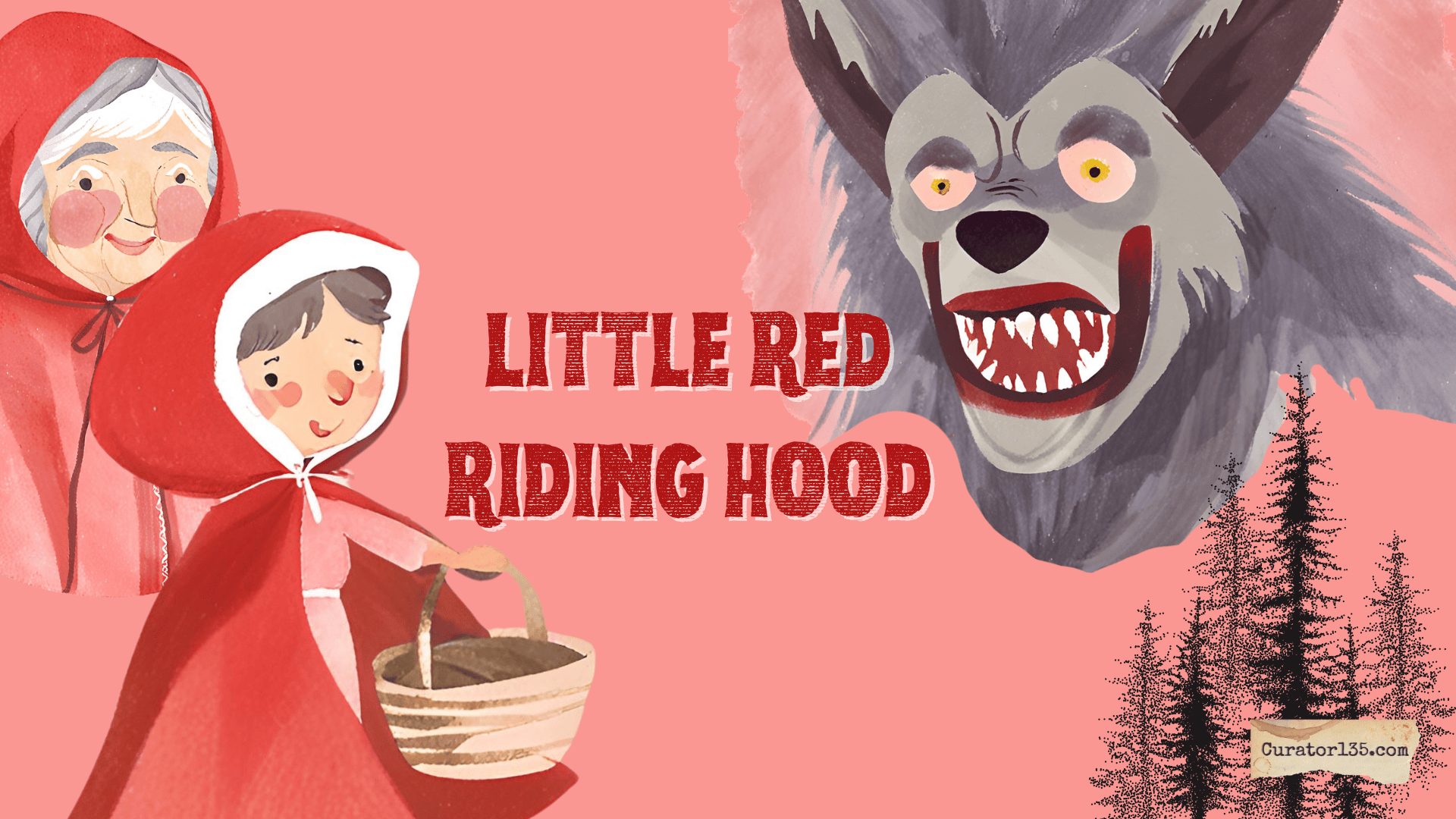
The Little Red Riding Hood fairy tale traces its origins back to European oral storytelling traditions. Some of the earliest known versions appeared in the 10th century, spreading through rural France and Italy. These early tales were darker and featured gruesome elements. The young girl often unknowingly consumes parts of her grandmother, who the wolf has killed, or she faces other disturbing fates. Storytellers used these versions as cautionary tales, warning children about the dangers of wandering alone and trusting strangers.
The story took its modern form in the 17th century when French author Charles Perrault published his version, Le Petit Chaperon Rouge. Perrault added the iconic red hood and removed some of the darker, more violent details. He made the ending grim, with the wolf devouring both the girl and her grandmother as a moral lesson against trusting strangers. Later, the Brothers Grimm adapted the tale, adding a happier ending where a huntsman rescues Red Riding Hood and her grandmother. This version became the most popular and shaped the story into the well-known fairy tale it is today.
What has changed?


Charles Perrault’s early version of the tale ended with the wolf eating Little Red Riding Hood and her grandmother, with no rescue. The story served as a cautionary tale about trusting strangers, with a grim, fatal ending.
4. The Little Mermaid

The Little Mermaid fairy tale originated with Danish author Hans Christian Andersen. He wrote and published the story in 1837 as part of his collection Fairy Tales Told for Children. Unlike many fairy tales based on older folk stories, The Little Mermaid was Andersen’s original creation. Inspired by themes of unrequited love, sacrifice, and the longing for an immortal soul, he crafted a story about a young mermaid who falls in love with a human prince and is willing to give up everything to be with him.
Andersen’s Little Mermaid was much darker than modern retellings. In his version, the mermaid endures intense pain as she gains human legs, only to be rejected by the prince. Facing death, she chooses selflessness over revenge, dissolving into sea foam rather than harming him. Scholars believe Andersen drew on his own experiences of unreturned love, giving the story its melancholy and complex emotional depth. Disney’s adaptation in 1989 gave the story a happier ending, but Andersen’s original remains a poignant tale of love and sacrifice.
What has changed?


Hans Christian Andersen’s version of The Little Mermaid was tragic. When the mermaid fails to win the prince’s love, she faces death and dissolves into sea foam. Andersen’s story, which highlights themes of sacrifice and unrequited love, was intended for a more mature audience. The Little Mermaid experienced agonizing pain while walking on her human legs.
5. Pinocchio

The Pinocchio fairy tale originated in Italy, written by Carlo Collodi in 1881. Collodi first published the story as a series in an Italian children’s magazine, Giornale per i Bambini, under the title The Story of a Puppet. The tale follows Pinocchio, a mischievous wooden puppet who dreams of becoming a real boy but often makes poor choices. Collodi’s story was both entertaining and moralistic, intended to teach children about honesty, hard work, and the dangers of disobedience.
Originally, Pinocchio was much darker than modern versions. Collodi wrote harsh consequences for Pinocchio’s mistakes, including near-death experiences and brutal punishments. In fact, he initially ended the story with Pinocchio being hanged for his misdeeds. However, due to its popularity, Collodi expanded the story and gave it a more hopeful ending where Pinocchio finally redeems himself. In 1940, Disney adapted Pinocchio into a beloved animated film, softening its darker elements and adding a more whimsical tone.
What has changed?


Carlo Collodi’s 1881 story was dark and moralistic. Pinocchio faced severe consequences for his actions, including near-death experiences, torture, and even hanging. Collodi intended these harsh lessons to teach children about the dangers of disobedience and dishonesty. Plus, in the original, Pinocchio kills the cricket by throwing a hammer at its head.
The Great Minds behind the tales


Leave a Reply